
Piletest Newsletter
24 juin 2026
June 2026
Free Tips on Pile Integrity Testing in this Piletest Newsletter
5 Common Pile Defects:
How to Detect Them & What They Cost?
When foundation piles fail, the consequences extend far beyond the construction site. A single undetected pile defect can compromise structural integrity, trigger costly repairs, and in worst cases, lead to catastrophic failure. Understanding pile defects isn't just about meeting code—it's about protecting investments and lives.

[object Object]
19 mai 2026
May 2026
How to assess the pile length with a pile integrity test?
Should you trust the contractor's length estimate for PIT?
The ASTM D5882 standard for low-strain pile testing, also known as PIT, does not specify measuring pile length. Although the length value is commonly reported, it is still an assessment, not a measurement of the length. For a start, it depends on the assessment of speed waves...read more - and add your point! Also here on LinkedIn.

[object Object]
20 avr. 2026
April 2026
PIT, where should you hit the pile head?
Where should PIT hit the pile head? Achieving accurate results in Pile Integrity Testing (PIT) starts with precision at the surface. Knowing exactly where to strike the pile head is critical for generating clear stress waves and avoiding signal interference. Is it? This post answers that and explains how to interpret the instructions of the ASTM D5882 standard

[object Object]
11 mars 2026
March 2026
The "Precious Present" in Pile Testing: Identifying Second Reflections
The Significance of the Second Reflection in Pile Integrity Testing (PIT) Unlock the secrets of Pile Integrity Testing! Our latest blog explores why a "second reflection" is a precious gift for verifying pile depth. Learn which soil conditions trigger this signal and how to use our PET tools for more confident interpretations.

12 févr. 2026
February 2026
How the average result points to a good analysis
How site averaging of PET can come to the rescue of PIT in challenging conditions. The following points summarize key considerations when analyzing low-strain test results, particularly for deep piles in soft soil with high length-to-diameter (L/D) ratios. Diagnostic Challenges High L/D Ratio & Soft Soil Unrealistic Toe Expectation Read more on how to handle this scenario in this blog post

20 janv. 2026
January 2026
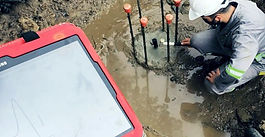
How wireless pile integrity testers improve your productivity
12 déc. 2025
December 2025
Is that a flaw at the top of the pile? Energy drop mystery?
The energy loss in the top few meters, as seen in the screenshot below, is well known and familiar. Usually, it does not indicate a flaw in the concrete. Nevertheless, the root cause of this was never truly investigated. I know of several cases where core drilling was performed, but no significant changes in concrete quality were detected. Some theories have been brought up, including trapped air bubbles (which are compressed at larger depths), surfacing of mixed slurry, retarders, and more - but nothing was ever proven. To summarize: This is a familiar yet unexplained finding that typically does not indicate a flow.

11 nov. 2025
November 2025
Can wireless communication transform pile integrity testing?

21 oct. 2025
October 2025
When is it better to do a CSL test with CHUM

17 sept. 2025
September 2025
Dynamic Load Test - What to notice when performing a DLT

20 août 2025
Aug 2025
Pile Echo Test for all foundations! Is that a good idea?

16 juil. 2025
July 2025
Should a Pile Integrity Test be done on 100% of the construction site piles

24 juin 2025
June 2025
Analysis Decision Supporting tools for Pile CrossHole test
PET - Pile Integrity Test Decision-supporting Tools While it is well known that the CSL test has DFI criteria (A, B, and C) and there is Tomography as a decision-supporting tool, the pile integrity test (PIT) is mostly about interpretation. In this blog, we try to cover the decision-supporting tools available from Piletest PET. One is online and available for all - The PileWave simulator, and another is the signal match pile profile builder available with the PET. How do these help with your PIT analysis?

14 mai 2025
May 2025
Want to map your pile foundations on Google Maps?

16 avr. 2025
April 2025
What if you want to build on top of an old pile?

19 mars 2025
March 2025
How pile length data improves your pile integrity test

13 févr. 2025
February 2025
When borehole inclination test meets AR

14 janv. 2025
January 2025
What is your AI feature wish for pile testing equipment?

12 déc. 2024
December 2024
Large Pile, Fast Assessment & Happy New Year

